
The #1 Radon Question on Reddit: What Happens If Your Home Tests High for Radon?
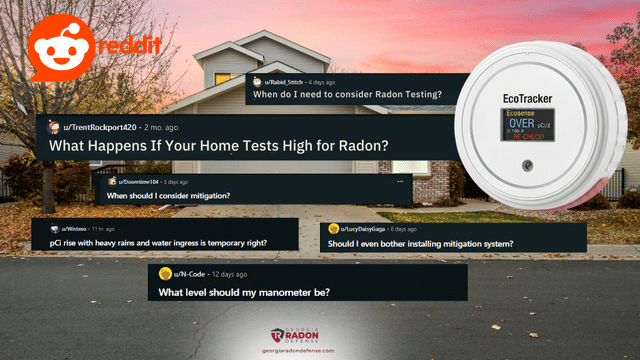
“Just got our inspection report back… radon level is high. Should we walk away or fix it?”
If you’ve found yourself asking something similar, you’re definitely not alone. This is one of the most common questions homeowners ask, especially during a home purchase or right after moving in. Seeing a high radon result can feel alarming at first, but here’s the reality: it’s more common than you think, and more importantly, it’s fixable.
Let’s break it down in a simple, real-world way.
What Is Radon (And Why Does It Matter)?
Radon is a naturally occurring gas that comes from the breakdown of uranium in soil and rock. You can’t see it, smell it, or taste it—which is why it often goes unnoticed without testing.
The concern comes from long-term exposure. Elevated radon levels over time have been linked to lung cancer, which is why testing is a standard part of many home inspections today.
The key thing to understand:
Radon isn’t rare. It’s actually pretty common in homes across the U.S. including Georgia.
“My Home Tested High… What Does That Actually Mean?”
Radon is measured in picocuries per liter (pCi/L). The EPA recommends taking action if levels are 4.0 pCi/L or higher.
So if your test came back above that number, it doesn’t mean your home is unsafe to live in immediately, it just means it’s time to take the next step.
And this is where many homeowners pause and wonder:
Do I panic? Do I walk away? Is this a dealbreaker?
Short answer: No, it’s not a dealbreaker.
Why Do Some Homes Have High Radon Levels?
This is another big Reddit-style question: “Why my house?”
Radon levels vary from home to home, even between neighbors. Here’s why:
- Soil composition under your home
- Foundation type (basements, crawl spaces, slabs)
- Small cracks or openings where gas can enter
- Ventilation and airflow patterns
In Georgia, certain areas are more prone to radon due to natural geology. So if your home tested high, it’s not because of something you did wrong, it’s just how radon behaves.
What Should You Do Next? (Step-by-Step)
If you’ve just gotten a high radon result, here’s a straightforward path forward:
1. Confirm the Test Results
If the test was short-term, you might consider a follow-up or continuous test to confirm accuracy.
2. Don’t Panic—Look at Solutions
Radon problems are routinely solved with proven systems. Thousands of homes are mitigated every year.
3. Install a Radon Mitigation System
A typical system works by venting radon gas from beneath your home and safely releasing it outside before it enters your living space.
These systems are:
- Highly effective
- Long-lasting
- Quiet and unobtrusive
Most homes see a significant reduction in radon levels after installation.
4. Retest to Confirm Lower Levels
After installation, a follow-up test ensures everything is working properly and your levels are now within a safe range.
Real Talk: Should You Walk Away From a Home With High Radon?
This comes up all the time in forums and discussions.
The honest answer? No.
Here’s why:
- Radon is fixable in most homes
- Mitigation is often more affordable than people expect
- Sellers are sometimes willing to cover the cost during negotiations
- You’re not “stuck” with the problem long-term
In fact, many buyers use a high radon test as a negotiation point rather than a dealbreaker.
Is This Common in Georgia Homes?
Yes—very.
Many homeowners in Georgia only discover radon during:
- Home inspections
- Real estate transactions
- Routine indoor air quality checks
The good news is that professionals in the area are very familiar with local conditions and know how to design systems that work effectively for Georgia homes.
The Bottom Line: High Radon Isn’t the End of the Story
If your home tests high for radon, it’s completely normal to feel concerned—but it’s not something you have to live with.
Radon issues are:
- Common
- Understandable
- And most importantly—solvable
With the right approach, you can reduce levels and feel confident about the air in your home again.
Need Help Navigating Next Steps?
If you’re unsure what to do after a high radon test, working with experienced professionals can make the process simple and stress-free. From testing to system design and installation, having the right team ensures everything is handled correctly the first time.