
Radon Mitigation DOs and DON'Ts: What Georgia Homeowners Should Know Before Installing a System
Radon is an invisible and odorless gas that can enter homes through the soil beneath the foundation. While you cannot see or smell it, long-term exposure can pose serious health risks. According to the United States Environmental Protection Agency, radon is the second leading cause of lung cancer in the United States, making it one of the most important indoor air quality concerns for homeowners.
If radon testing reveals elevated levels in your home, installing a radon mitigation system is often the most effective solution. However, the success of that system depends heavily on proper installation and informed decision-making. Understanding the key DOs and DON’Ts of radon mitigation can help Georgia homeowners protect their families while avoiding common mistakes.
What Is a Radon Mitigation System?
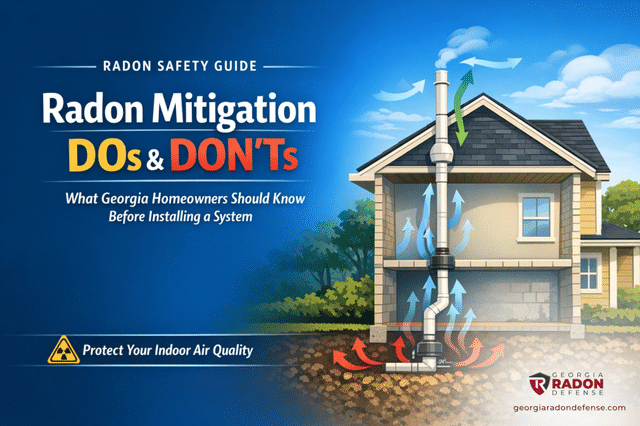
A radon mitigation system is designed to reduce the amount of radon gas entering your home. The most common method used is called sub-slab depressurization, which removes radon from beneath the home and safely vents it outside.
A typical radon mitigation system includes:
-
A suction pipe inserted beneath the foundation or slab
-
A specialized radon fan
-
Vent piping that releases radon gas above the roofline
The system works by pulling radon from the soil before it can enter the living space. Once captured, the gas is vented safely outside where it disperses into the air.
Professional mitigation systems can reduce radon levels significantly, often bringing them below the action level recommended by the United States Environmental Protection Agency.
How Much Does Radon Mitigation Cost?
The cost of installing a radon mitigation system varies depending on the home’s structure and the complexity of the installation.
On average, radon mitigation costs around $1,200, although most systems range between $800 and $2,500.
Several factors can affect the price, including:
-
The size and layout of the home
-
Whether the home has a crawlspace, basement, or slab foundation
-
The existing radon levels
-
Accessibility for installing piping and fans
-
Local labor and materials
Because every home is different, a professional inspection is usually required before an accurate estimate can be provided.
Important Radon Mitigation Considerations in Georgia
Homeowners in Georgia should be aware of an important detail: the state does not currently require radon mitigation contractors to hold a license or certification.
This means homeowners should take extra steps to ensure they are hiring qualified professionals. Programs such as the University of Georgia Extension recommend working with contractors who have received specialized radon training and certification.
Choosing a knowledgeable professional help ensure the mitigation system is installed correctly and performs as expected.
Radon Mitigation DOs
Do Choose a Certified Radon Professional
Even though certification is not required in Georgia, homeowners should strongly consider hiring contractors certified by organizations such as:
Certification demonstrates that the contractor has received proper training in radon testing and mitigation techniques.
Do Request Multiple Estimates
Getting more than one estimate can help homeowners:
-
Compare installation methods
-
Evaluate system design recommendations
-
Understand cost differences between contractors
Written estimates also provide documentation that helps prevent misunderstandings later in the process.
Do Ask for References
Reputable radon mitigators should be able to provide references from previous customers.
When contacting these references, consider asking:
-
What were the radon levels before the system was installed?
-
Did the mitigation system reduce levels below the recommended threshold?
-
Were you satisfied with the installation and service?
This feedback can help you choose a contractor with a proven track record.
Do Make Sure the Home Is Properly Evaluated
Before recommending a system, a professional mitigator should inspect the home’s structure. This evaluation helps determine the most effective installation method.
The inspection may include reviewing:
-
The home’s foundation type
-
Crawlspaces or basement areas
-
Potential radon entry points
-
Existing ventilation systems
Every home has different structural conditions, which means mitigation systems should be customized for best results.
Radon Mitigation DON’Ts
Just as important as knowing what to do is understanding what mistakes to avoid during the radon mitigation process.
Don’t Hire Contractors Without Experience
Because certification is not mandatory in Georgia, some contractors may offer mitigation services without proper training.
Hiring inexperienced installers may lead to:
-
Poorly designed systems
-
Ineffective radon reduction
-
Higher repair costs later
Choosing a trained professional help ensure the system performs properly and meets safety guidelines.
Don’t Forget Post-Mitigation Testing
After installing a radon mitigation system, it is essential to verify that it works.
A follow-up radon test should be conducted:
-
Within about 30 days of installation
-
Using a short-term test lasting two to seven days
-
Under closed-house conditions
This test confirms whether radon levels have been successfully reduced.
Installation Guidelines Homeowners Should Know
Proper installation plays a major role in how effective a radon mitigation system will be.
Several important installation standards include:
-
The exhaust pipe should vent above the roofline of the home
-
Vent pipes should be located at least 10 feet away from windows or openings
-
Radon fans should not be installed inside living spaces
-
Electrical components must meet local building and electrical codes
In many systems, a warning device or monitoring gauge is also installed to alert homeowners if the system stops working.
These features help ensure the mitigation system continues to operate safely and efficiently.
How Often Should Homes Be Retested for Radon?
Installing a mitigation system does not eliminate the need for future testing.
Experts recommend retesting radon levels:
-
Every two years
-
After major home renovations
-
When purchasing or selling a home
-
If the mitigation system is repaired or modified
Regular testing helps confirm that radon levels remain at safe levels over time.
Protecting Your Home and Family from Radon
Radon mitigation systems can dramatically reduce radon levels when they are designed and installed correctly. By understanding the essential DOs and DON’Ts, Georgia homeowners can make informed decisions and avoid costly mistakes during the mitigation process.
From selecting a qualified contractor to confirming results through post-installation testing, each step plays a role in ensuring the system performs effectively.
If elevated radon levels are detected in your home, taking action quickly can help improve indoor air quality and provide peace of mind for your family.